Performance Marketing Meaning: A Plain English Explanation
Breaking Down Performance Marketing in Simple Terms
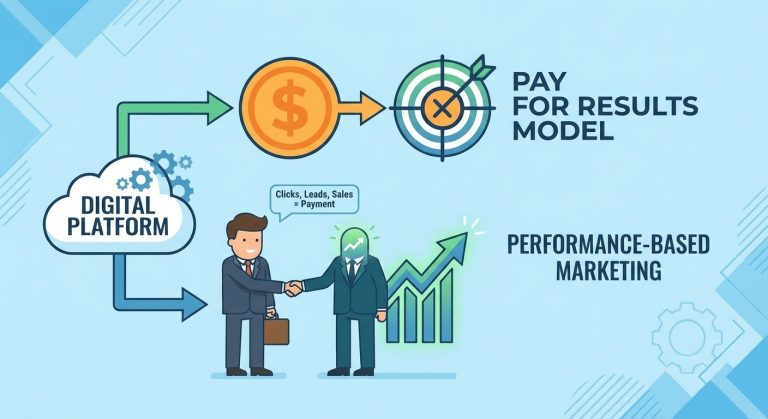
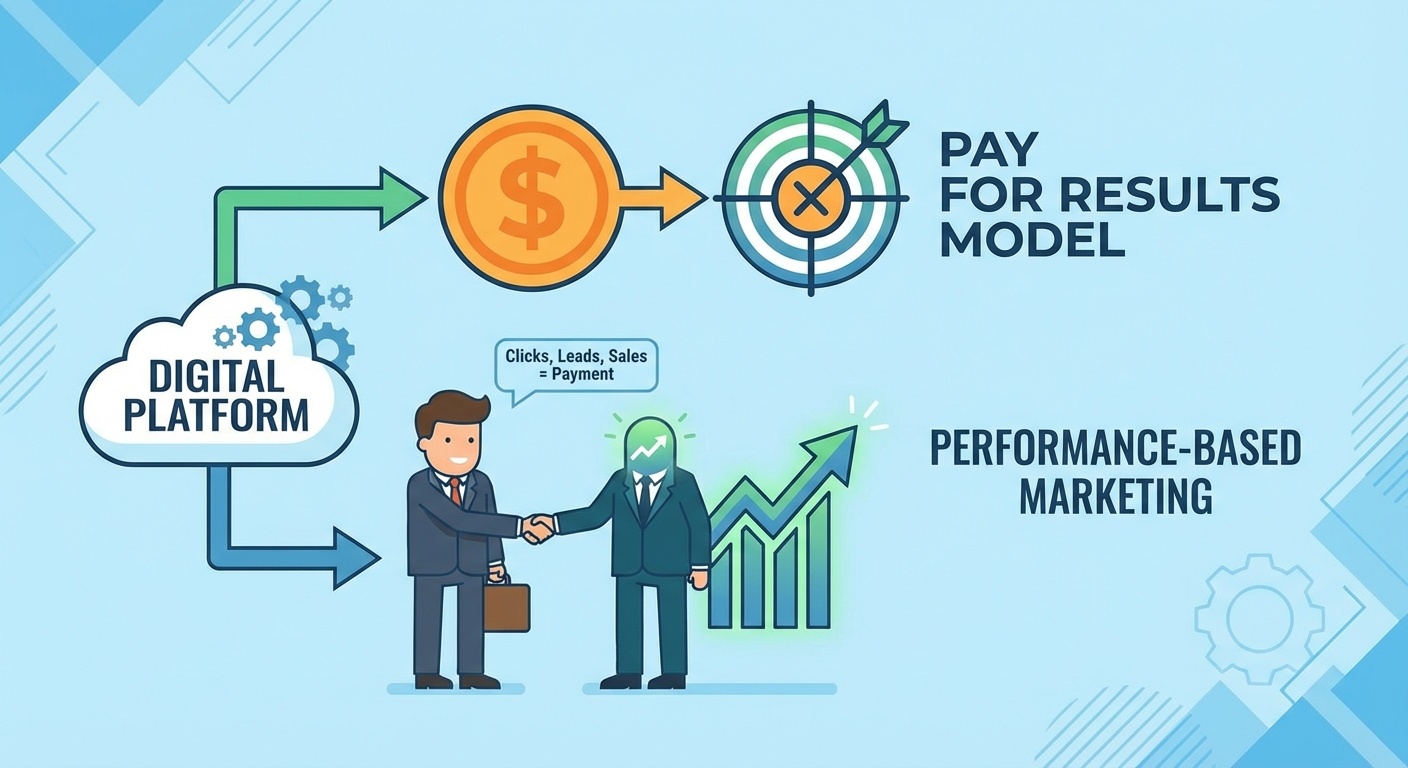
Imagine you’re hiring a salesperson who only gets paid when they make a sale. That salesperson works harder, focuses on quality leads, and ensures every interaction counts. Performance marketing works exactly the same way—businesses only pay when specific actions happen, whether that’s a click, a lead, or a sale.
This simple concept has revolutionized how companies approach advertising. Instead of gambling with big budgets on broad campaigns with uncertain returns, businesses now have complete control over their spending and can trace every dollar to tangible results.
Understanding the Core Concept
At its heart, performance marketing operates on a straightforward principle: pay for performance. Traditional advertising models charge based on potential reach—think of a billboard along a busy highway that thousands of people might see. Performance marketing flips this by only charging when someone actually takes action.
The model has gained massive popularity because it aligns incentives perfectly. Advertisers want results, publishers want to deliver results to earn their commissions, and platforms compete to provide the best targeting and optimization tools. This creates an ecosystem where everyone benefits when campaigns perform well.
Consider a small e-commerce business selling handmade jewelry. With traditional advertising, they might spend $5,000 on a magazine ad hoping to attract customers. They won’t know for months if the ad worked, and by then, it’s too late to adjust. With performance marketing, they can spend the same $5,000 on targeted ads that only charge when someone actually purchases. If an ad isn’t converting, they know immediately and can pause or modify it.
How It Actually Works in Practice
The performance marketing ecosystem involves several key players working together. Advertisers are businesses wanting to promote their products or services. They set specific goals and define what actions they’re willing to pay for. Publishers are the websites, apps, or platforms that display advertisements. They earn money when their audience takes the desired action.
Networks and platforms serve as intermediaries, providing the technology infrastructure that makes tracking and attribution possible. They connect advertisers with publishers and ensure everyone gets paid fairly for their contributions to the customer journey.
Here’s a practical example: A fitness app wants to acquire new subscribers. They set up a performance marketing campaign offering $10 for every new user who signs up through their ad. A fitness blogger publishes a review mentioning the app and includes a special link. When a reader clicks that link and signs up, the blogger earns $10. The advertiser only pays when they get a new subscriber—not for views or clicks that didn’t convert.
The Benefits That Make It Irresistible
The advantages of performance marketing extend beyond simple cost savings. Perhaps most importantly, it removes much of the risk from advertising. Companies no longer need massive budgets to “test” campaigns. They can start small, prove the model works, then scale up gradually.
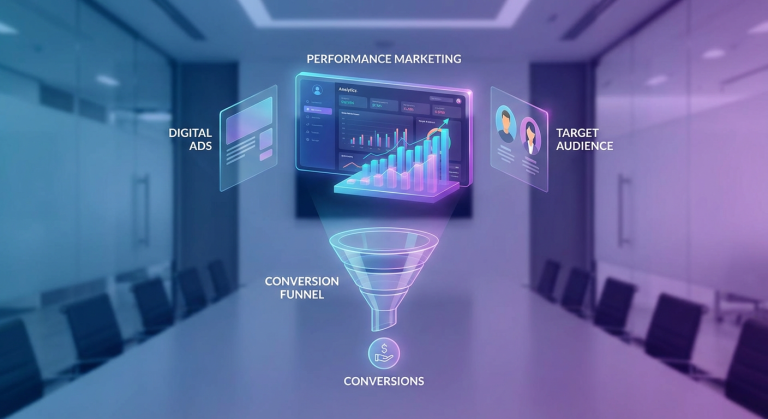
Transparency is another major benefit. Every metric is trackable—impressions, clicks, conversions, costs, and revenue. This data enables continuous optimization. Businesses can identify exactly what’s working and what isn’t, making informed decisions rather than relying on gut feelings or incomplete information.
The flexibility cannot be overstated either. Traditional advertising campaigns often require months of planning and commitment. Performance marketing campaigns can be launched in hours, adjusted in real-time, or paused instantly when necessary. This agility proves invaluable in fast-moving markets where consumer preferences shift quickly.
Common Misconceptions Debunked
Some business owners worry that performance marketing means sacrificing brand building for short-term sales. While it’s true that performance marketing excels at driving measurable actions, successful campaigns incorporate both approaches. Brand awareness campaigns create the foundation that performance campaigns build upon.
Another misconception involves minimum budget requirements. While enterprise-level campaigns certainly exist, performance marketing accommodates businesses at every level. Many platforms allow starting with daily budgets as low as $5, making it accessible even for solopreneurs and small startups.
Some fear that focusing exclusively on measurable metrics leads to ignoring important but harder-to-quantify outcomes like customer loyalty or brand perception. Savvy marketers address this by tracking both performance metrics and brand health indicators separately, using each to inform different aspects of their marketing strategy.
Real-World Applications Across Industries
Performance marketing serves virtually every industry, though applications vary significantly. E-commerce companies use it extensively for product sales, often seeing ROAS (return on ad spend) ratios of 4:1 or higher when campaigns are well-optimized. B2B companies leverage it for lead generation, with cost-per-lead metrics guiding budget allocation across channels.
Mobile app developers have found particular success with performance-based user acquisition, paying only for app installs or in-app actions. This model enables sustainable growth without the cash burn associated with traditional app marketing.
Service businesses—from consultants to home service providers—use performance marketing to fill their pipelines with qualified leads. By partnering with lead generation networks that specialize in their industries, they receive pre-qualified prospects rather than cold outreach.
Getting Started: A Practical Roadmap
Beginning your performance marketing journey doesn’t require expertise or huge budgets. Start by defining clear objectives—what specific actions do you want users to take? These could be purchases, form submissions, app installs, or any other measurable outcome.
Next, establish your tracking infrastructure. Without proper tracking, you can’t measure performance or optimize effectively. Most advertising platforms provide built-in tracking, but advanced marketers often implement additional pixels and conversion APIs for greater accuracy.
Begin with a modest budget and one or two channels. Learn what works before expanding. The data you gather in these initial campaigns will inform all future decisions—so take notes and analyze results carefully.
Remember that success requires patience and persistence. Your first campaigns won’t be perfect, and that’s okay. Continuous testing, learning, and refinement separate successful performance marketers from those who give up too soon.
Frequently Asked Questions
Is performance marketing the same as digital marketing?
No. Digital marketing encompasses all marketing that uses digital channels—email, social media, websites, and more. Performance marketing is a specific payment model within digital marketing where advertisers pay only for measurable actions.
What happens if my performance marketing campaign doesn’t work?
That’s the beauty of the model—you only pay when it works. However, if campaigns underperform, analyze the data to identify issues. Common problems include poor targeting, uncompelling creative, or landing pages that don’t convert visitors into customers.
How much should I budget for performance marketing?
Start small and scale based on results. Many businesses find success with monthly budgets of $1,000-3,000 while learning the ropes. As you prove profitability, increase budgets proportionally.
Can performance marketing work for B2B businesses?
Absolutely. While sales cycles tend to be longer, B2B companies successfully use performance marketing for lead generation. Focus on cost-per-lead metrics rather than immediate sales.
Do I need technical skills to do performance marketing?
Basic campaigns can be launched without technical skills using platform-provided tools. However, advanced optimization typically requires understanding of tracking, attribution, and data analysis.